

1. A launch that started under pressure
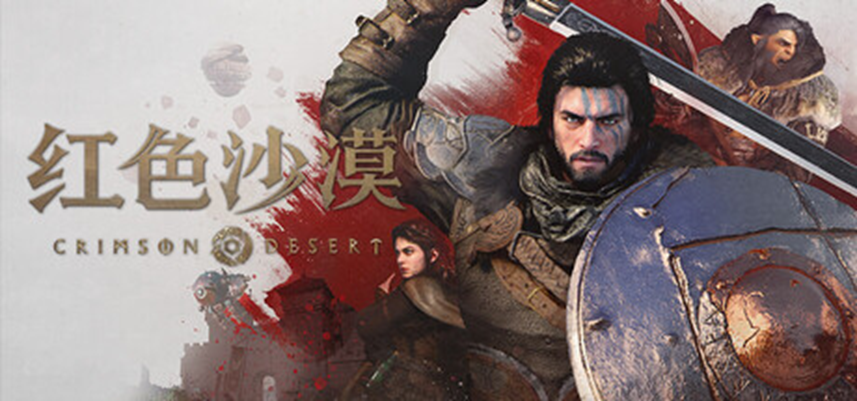
After Crimson Desert officially launched in March this year, it quickly became one of the most discussed games in the industry. Yet despite the attention and hype, its debut was not an easy one. Before release, there were lingering doubts about its polish and real-world performance. After launch, debate over its accessibility, onboarding, and pacing only intensified.
What makes the story more interesting is how that conversation changed over time. As players spent more time with the game, the development team continued to make fixes, and community discussion kept building, the tone around the game began to shift. It did not reverse its reputation through one dramatic “comeback moment.” Instead, it gradually brought sentiment back on track through ongoing feedback, updates, and experience improvements. To date, Crimson Desert has surpassed 5 million copies sold, and its Steam user sentiment has risen to 83% positive.
That kind of turnaround is rare.
For a large-scale open-world action game with extremely high expectations, every detail in the launch window gets magnified. Players do not just want a game that is big. They want one that is stable, coherent, and genuinely good. In many ways, the early criticism around Crimson Desert came from exactly that tension: the promotional visuals were striking enough to set a very high bar, but once players got into the game, the complexity of the systems and the learning curve made the first experience feel less welcoming than expected.
That kind of turnaround is rare.
For a large-scale open-world action game with extremely high expectations, every detail in the launch window gets magnified. Players do not just want a game that is big. They want one that is stable, coherent, and genuinely good. In many ways, the early criticism around Crimson Desert came from exactly that tension: the promotional visuals were striking enough to set a very high bar, but once players got into the game, the complexity of the systems and the learning curve made the first experience feel less welcoming than expected.
2. Why post-launch fixes mattered so much
That is precisely why the later fixes and refinements mattered so much.Not long after launch, the development team rolled out focused updates addressing inventory capacity, mouse and keyboard support, and core usability issues. For a globally released large-scale project, this kind of patching is not just about fixing problems. It is also about restoring confidence. More often than not, players are willing to revisit a game not because it was perfect from day one, but because when problems did appear, the team responded quickly and showed a clear willingness to improve.
For Crimson Desert, that round of updates became an important turning point in its reputation recovery.
3. Combat depth became the game’s strongest proof point
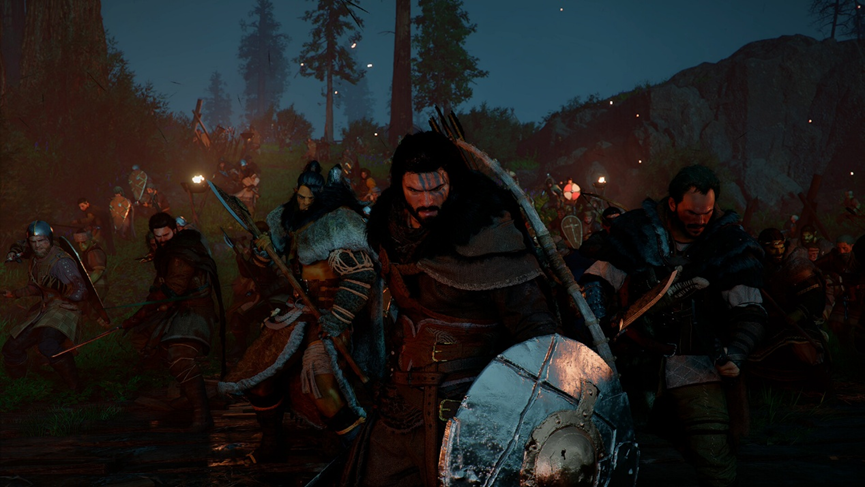
If the launch controversy centered on the learning curve, combat later became the core reason the game started winning players back.
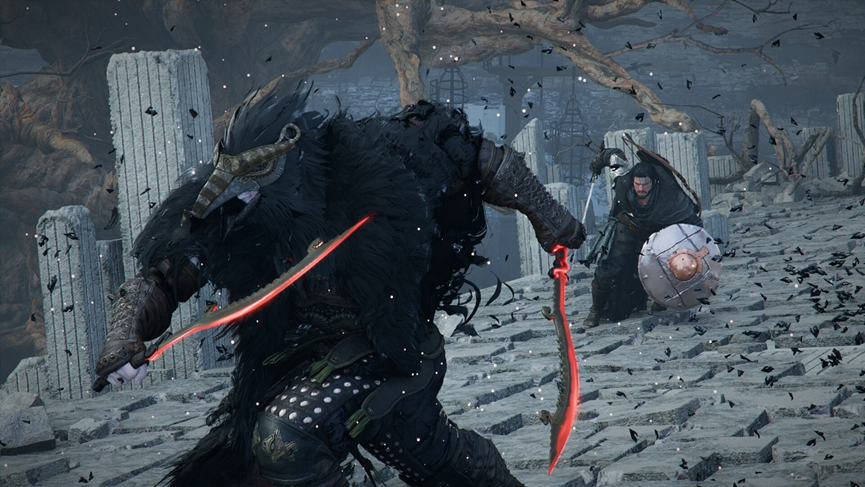
Unlike many action games built mainly around numerical advantage, Crimson Desert places more emphasis on physical feedback, spatial awareness, and combat rhythm. Terrain can be used strategically, enemy movements must be read carefully, and grappling, throws, and environmental interactions all affect how a fight unfolds. This kind of design does not cater to instant gratification. Instead, it offers a more deliberate action experience that asks for patience and understanding.
At first glance, it may seem less approachable. Once you understand the system, though, it reveals a great deal of tactical flexibility and layered action design.
That is also what created a clear divide in public response. For some players, the high barrier to entry was a deal-breaker. For others, that same barrier was a sign of depth and long-term value.
So many action games chase the idea of giving players immediate satisfaction. Crimson Desert, by contrast, hides that satisfaction behind comprehension. The deeper you go, the more the systems begin to interlock, and the clearer it becomes that the developers were aiming for a full combat structure rather than surface-level spectacle. In that sense, the slower pace is also a filter: it naturally sorts players by how much they are willing to invest.
4. Visual consistency gave the world its identity
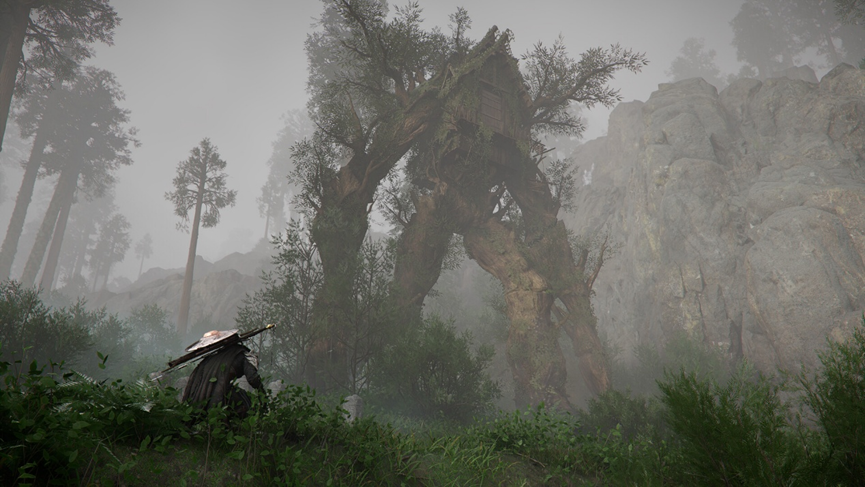
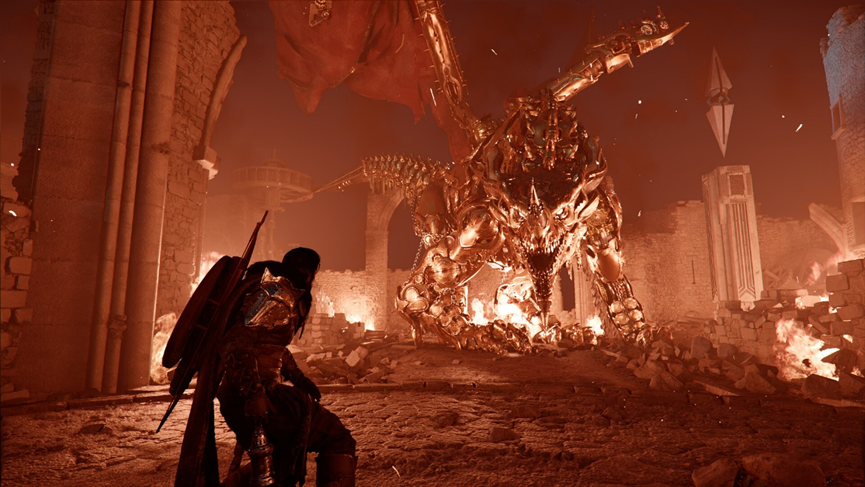
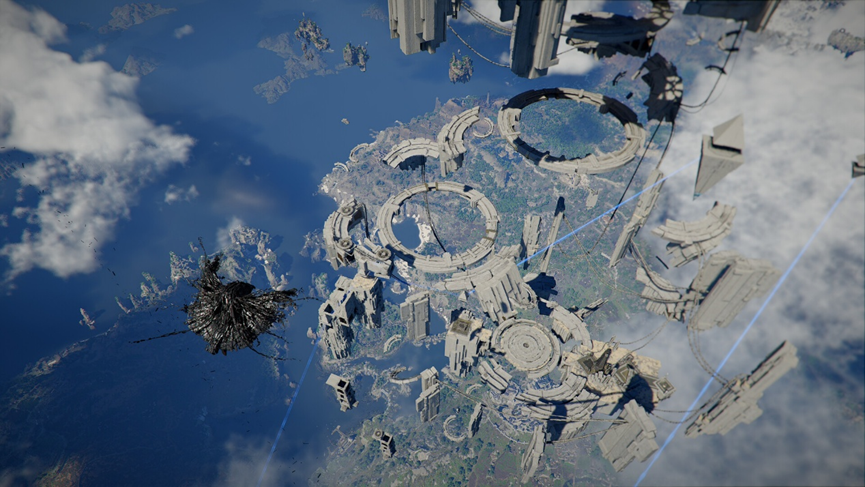
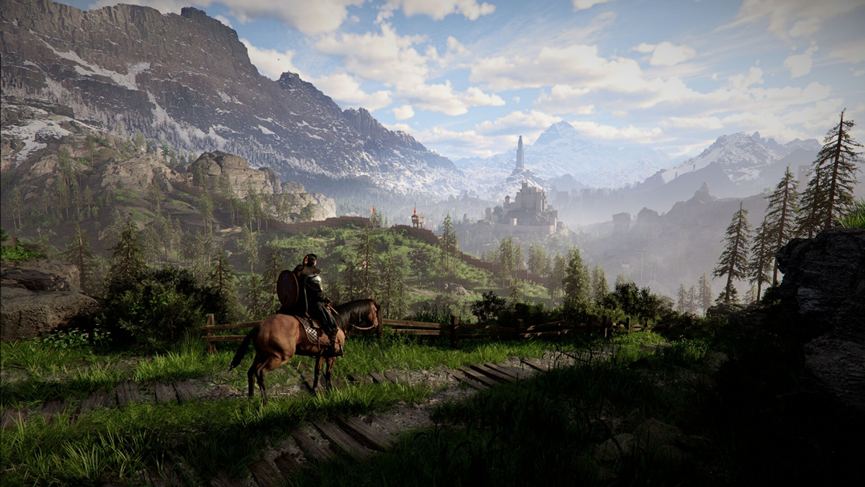
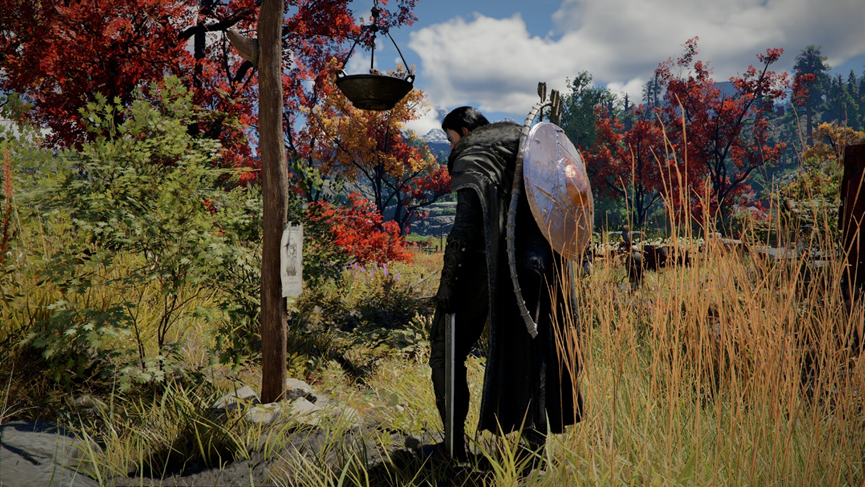
The visual presentation is another part of Crimson Desert that cannot be overlooked.From large-scale terrain and weather shifts to long-distance depth and changing light, the game shows a very mature level of overall art direction.
On the surface, this may just look like “good graphics.” The harder part is that the game does not rely on a single stunning scene to carry the experience. Instead, it keeps its visual language consistent throughout, so that even when players move between different regions, they still feel as though they are in the same world. What players explore is not a collection of scattered pretty views, but an open world with a clear style and a unified visual logic.
For an open-world game, that sense of wholeness often matters more than raw graphical settings. What truly sets a game apart is not visual style alone, but whether that style aligns with the technical execution and the gameplay experience.
Many games look impressive in trailers, only to lose credibility at launch because of broken scene transitions, unstable performance, or disconnected interaction design. On this front, Crimson Desert at least shows strong control. Its visuals are not there just to show off. They support immersion in the world, which is one reason the game has continued to draw discussion even beyond the controversy.
5. Global release adds a second layer of complexity
Once a game enters a global release context, the difficult part has only just begun. For an open-world title, global localization is not as simple as translating the text into multiple languages. It involves terminology consistency, voice-over coordination, quest information, localization pacing, interface logic, and a large number of world-building elements that require cross-cultural understanding. When a game includes fictional clans, place names, character titles, and narrative clues, localization is effectively about reorganizing how players understand the world in each language environment.When it is done well, the result feels natural and seamless. When it is done poorly, the entire world can start to feel stiff, fragmented, and even immersion-breaking.
That is why localization for large games is increasingly not just a late-stage support function. It is one of the core elements shaping the final experience.
Most players will not consciously notice terminology glossaries, context checks, sentence splitting, or UI prompt optimization. But all of those things directly affect how efficiently they understand the story, quests, and system explanations. In high-density combat scenes and fast-moving information environments, clarity, brevity, and natural phrasing all affect immersion. For global releases, the real challenge is not whether something can be translated. It is whether it can be read smoothly.
6. A narrative built for active interpretation
Crimson Desert went through a similar wave of mixed reactions with its storytelling.Rather than following the easiest-to-understand linear narrative, it spreads a great deal of information across exploration, documents, environments, and character interactions, asking players to piece together the world and character motivations as they go. That structure naturally creates pacing fluctuations, especially in an open-world framework where main quests can be interrupted by side content. It is not surprising that some players felt the story was unclear early on.
Seen from another angle, though, that does not necessarily mean the narrative failed. It may simply be a form of storytelling that relies more heavily on player investment.
That is one of the hardest problems in open-world narrative design. The game wants to preserve freedom of exploration while still maintaining enough continuity in the story, and balancing those two goals is never easy. A structure like Crimson Desert’s, which distributes world-building information so that players gradually fill in the background through movement, reading, and observation, asks for patience. For players used to stronger guidance, that can feel distant. For players willing to settle in, it can be much more rewarding.
7. Community discussion helped reshape the game’s image
Community activity played a major role in that process. Guides, gameplay demos, edited clips, and systems-focused analysis gradually moved Crimson Desert from being seen as a controversial release to being viewed as a game worth studying.Some of the features that were once criticized as too demanding later became the focus of player discussion.
For example, finding a break point on a massive boss with a grappling hook, or building more efficient combat routes through terrain and action combinations, kept generating new waves of sharing. That, in turn, helped push the game’s reputation beyond the short-term reaction cycle of launch week.
From a broader perspective, Crimson Desert shows that competition among global AAA games is no longer just about promotional noise. It is about overall completion: whether the gameplay has depth, whether the systems are stable, whether the visuals are consistent, whether the text reads smoothly, and whether post-launch support is timely. A single weak point can magnify controversy around an entire title. But on the other hand, if the core experience is strong enough, even early criticism can be revisited and reinterpreted.
That is also the clearest answer to why localization and global release capability matter more than ever today.
For large-scale projects, text, voice, terminology, UI, and cultural adaptation are not separate modules. Together, they form part of the player’s path to understanding. That is why the value of a professional team is often not “seen” directly. It is felt through the smoothness of the experience.

8. The real reason its reputation recovered
Crimson Desert’s current reputation rebound should not be reduced to “players finally got it.” A more accurate reading is that the game kept refining itself until its real level of completion became visible.It is not the kind of game that instantly wins everyone over at first glance. But it does offer enough reasons to be reevaluated. Whether it is the combat system, the visual presentation, or the overall control behind its global release, the lesson is the same: the games that can stand firm through controversy are rarely held up by short-lived buzz. They are supported by structure that has been carefully built over time.
For large games heading into global markets, the lesson is clear. Going overseas is not about copying content into another language environment. It is about making gameplay, narrative, experience, and localization work as one closed loop. Only when those parts support each other can a game earn consistent understanding and recognition across markets. And only on that basis does a turnaround in reputation stop being luck and become an outcome.
Image source: Steam. Images used in this article are for illustrative and game recommendation purposes only. If there are any copyright concerns, please contact info@glodomtec.com for removal.
