

As Chinese companies expand into
international markets, their intellectual property (IP) strategies are becoming
increasingly complex, requiring coordinated action across multiple
jurisdictions and stages of the patent process. From Patent Cooperation Treaty
(PCT) applications and national phase entry to responses to office actions and
ongoing maintenance, the same invention must be described accurately and
consistently across different languages and legal systems.
These evolving needs are placing greater
demands on language services for intellectual property.
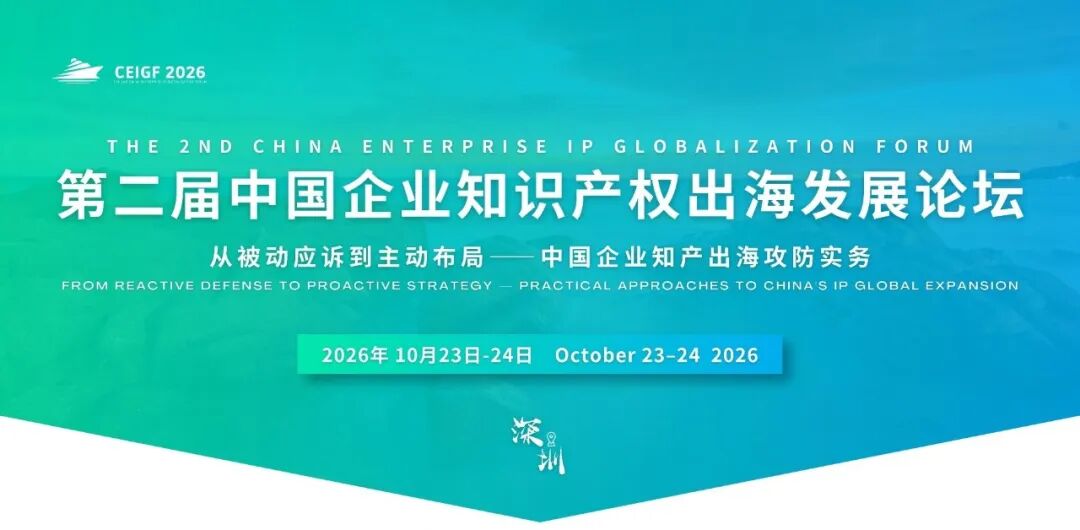
On October 23–24, 2026, the 2nd China
Enterprise IP Globalization Forum (2026 CEIGF) will take place in Shenzhen,
China.
Under the theme “From Reactive Defense to
Proactive Strategy: Practical Approaches to IP Protection and Global Expansion
for Chinese Enterprises,” the forum will explore key issues surrounding IP
protection, international portfolio development, and risk management as Chinese
companies expand globally. Glodom has been invited to attend the event, where
we look forward to exchanging practical insights with professionals from across
the IP services industry and the broader field of international business expansion.
1. From One-Off Translation to End-to-End Language
Management
For companies pursuing international patent
protection, translation is rarely a one-time deliverable.
A single invention may go through multiple
jurisdictions, procedural stages, and rounds of documentation. When terminology
varies between project batches or previously approved translations cannot be
reused effectively, the result can be higher coordination and review costs, as
well as inconsistencies across language versions of the same technical content.
Drawing on our experience supporting
companies in their international expansion, Glodom has extended its patent
language services beyond individual document delivery to encompass language
management throughout the patent lifecycle. Our service framework covers key
stages, including patent filing, national phase entry, and responses to office
actions, supporting projects involving multiple stages, document types, and
languages.
1.1 Patent Filing: Establishing Consistency from the Start
Patent documents combine technical subject
matter with legal language, demanding a high degree of accuracy, logical rigor,
and terminological consistency.
At the filing stage, Glodom assembles teams
based on the technical field, target markets, and specific project
requirements. Patent-experienced technical translators, native-language
reviewers, and professionals with relevant subject-matter expertise work
together on translation and quality assurance.
For complex fields such as software and
algorithms, information and communications technology (ICT), life sciences, and
new energy, our teams look beyond the accurate translation of individual
passages. They also maintain key terminology and technical expressions to
ensure consistency across the description, claims, abstract, and other related
documents.
1.2 National Phase Entry: Coordinating Across
Jurisdictions and Languages
When a PCT application enters the national
phase in different countries or regions, multiple language versions of the same
invention may need to be prepared and managed in parallel.
For companies, the challenge extends beyond
obtaining accurate translations. It also involves coordinating work across
jurisdictions and languages while preserving previously approved technical
terminology and expressions throughout subsequent projects.
With language resources spanning more than
40 countries and regions, Glodom supports multilingual patent projects in
English, Japanese, German, Spanish, and other languages. Our established
project management processes and language resource systems help coordinate
parallel workflows across multiple languages and jurisdictions.
1.3 Responding to Office Actions: Maintaining Consistency
in Subsequent Filings
Once a patent application enters
examination, further documentation may be required, including office actions,
written responses, and amended documents.
These materials are closely tied to the
technical subject matter and terminology established in the original
application. If each new round of work is handled independently,
inconsistencies in terminology and technical expression can arise.
To maintain continuity throughout the
process, Glodom continually maintains approved terminology and language
resources and applies them to subsequent documents, including office action
responses, written arguments, and amendments to patent specifications. This
helps ensure that each new translation builds on the established language
framework rather than starting from scratch.
This continuity is an important step in
moving patent language services beyond individual project delivery toward
end-to-end lifecycle management.

2. Making Language Assets Work Across Projects
For companies managing international patent
portfolios over the long term, every completed project generates valuable
resources, including approved terminology, technical expressions, and
previously translated content. As projects progress, the value of these
resources extends well beyond the original deliverable.
The key is to preserve these resources
across projects and put them to practical use, creating opportunities to
improve efficiency over time.
With this in mind, Glodom systematically
organizes and maintains approved terminology, translations, and specialized
expressions throughout project delivery. These resources are consolidated into
language assets, such as terminology databases and translation memories, and
reused in subsequent patent applications, office action responses, and related
technical documentation.
For companies, this means that the language
work completed for one project can inform the next. As international patent
portfolios grow, these assets continue to accumulate and improve, helping
reduce the cost of repeated work while maintaining consistency across project
batches and language versions.
3. Combining Specialized Expertise with Language
Technology
Complex patent projects demand both
subject-matter expertise and effective management of long-term, multilingual
workflows involving multiple rounds of documentation.
To meet these requirements, Glodom has
established a multi-layered quality assurance process covering translation,
review, and final quality checks. The process evaluates technical accuracy,
terminological consistency, and document compliance.
Glodom's proprietary G-Tranx translation
platform further supports this work by drawing on resources from previous
projects, terminology databases, and translation memories. These resources help
the team identify relevant matches and reuse approved content, improving the
efficiency of multilingual projects and repeated document workflows while
safeguarding the security of technical materials.
Specialists bring an understanding of the
technology and its context. Language assets preserve accumulated knowledge and
make it available for future projects. The technology platform helps teams
access and apply these resources more efficiently.
Bringing these three elements together is a
key part of Glodom's ongoing approach to language services for intellectual
property.
4. See You in Shenzhen on October 23–24
As companies deepen their international
expansion, IP globalization is becoming an increasingly strategic undertaking.
For businesses, international patent
portfolio management involves more than the number of applications filed or the
markets covered. It also requires a consistent approach to managing technical
information and specialized language across jurisdictions and throughout the
patent lifecycle.
At the 2nd China Enterprise IP
Globalization Forum, Glodom looks forward to connecting with industry partners
to discuss IP globalization, multilingual patent services, and language asset
management. We also look forward to sharing practical insights gained from our
long-standing work supporting companies as they expand into international
markets.
Join us at the 2026 CEIGF on October 23–24
at Courtyard by Marriott Shenzhen Bay. See you in Shenzhen!
