

On October 23–24, the 2nd China Enterprise
IP Globalization Forum (2026 CEIGF) was held in Shenzhen, China. Under the
theme “From Reactive Defense to Proactive Strategy: Practical Approaches to IP
Protection and Global Expansion for Chinese Enterprises,” the forum brought
together industry professionals to discuss international IP portfolio
development, risk management, and the practical challenges Chinese companies
face as they expand into overseas markets.
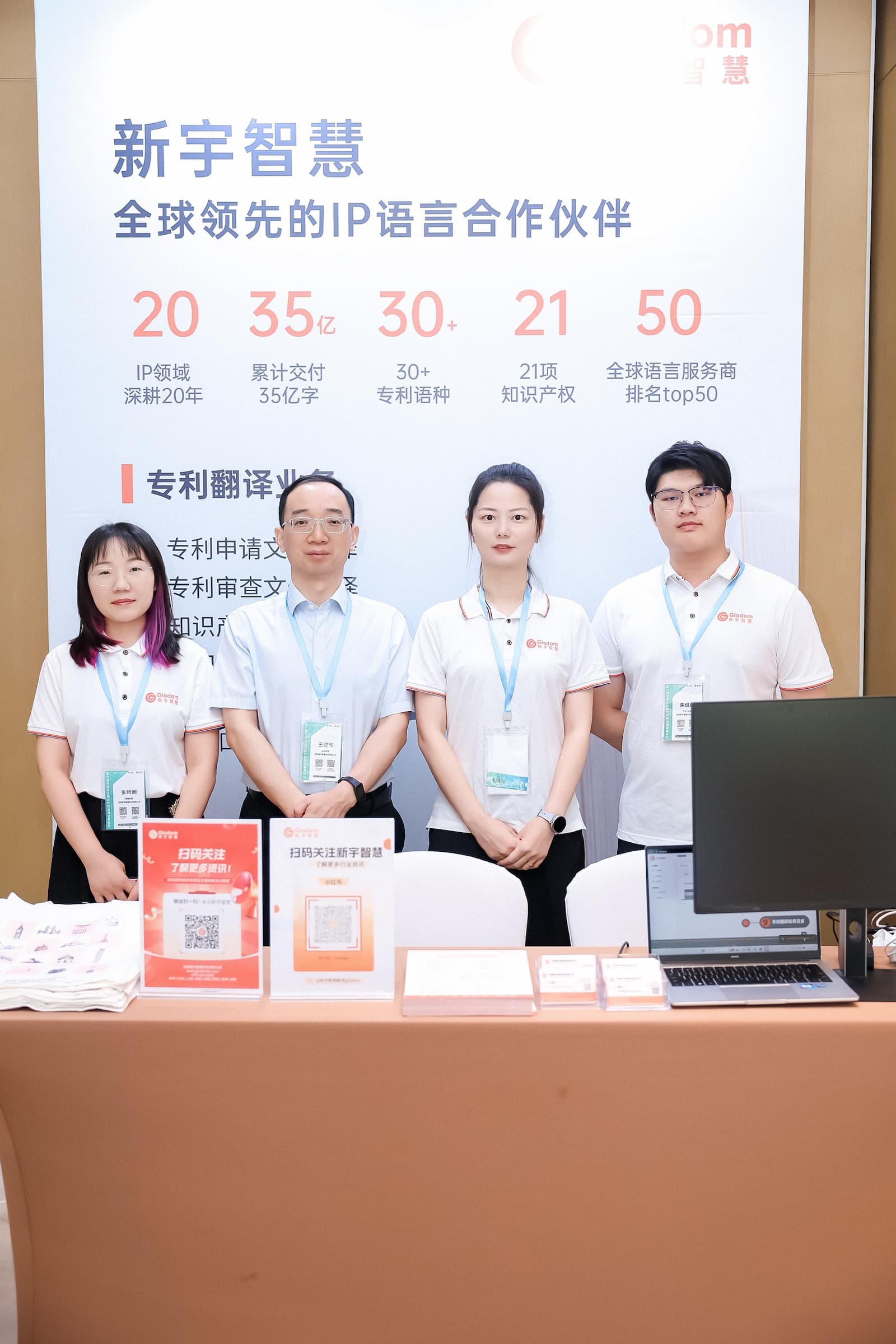
Glodom was invited to attend the forum,
where it exchanged insights with IP service providers and other professionals
supporting Chinese enterprises in their global expansion. Drawing on its
extensive experience in international patent projects, Glodom explored the
growing multilingual demands of global patent protection and shared its
perspectives on professional translation, continuity across patent prosecution
stages, and the role of language technology in IP services.
1. What Do Global Patent Projects Require from Language
Service Providers?
As Chinese companies expand their
international operations, their patent applications increasingly involve
multiple countries, languages, and stages of prosecution. From entering the
national phase of a Patent Cooperation Treaty (PCT) application to responding
to office actions and revising application documents, each stage builds on the
documents that came before it. Language requirements evolve accordingly.
Ensuring the accurate communication of
technical information while maintaining consistency across document versions
and stages has become an important consideration in international patent
projects.
Patent documents are inherently specialized
and require a high level of technical precision.
Patent specifications must clearly and
accurately describe the invention, while claims define key technical features,
their relationships, and the scope of protection sought. Terminology choices,
sentence structure, and logical relationships in a translation can all affect
how accurately the original technical meaning is conveyed. Translators
therefore need both a sound understanding of the relevant technology and
familiarity with the conventions of patent drafting.
International patent projects also tend to
span extended periods, involve multiple batches of documents, and require
several language versions.
As an application progresses, terminology
and expressions established in earlier documents may recur in subsequent
filings and supporting materials. Without an effective mechanism for
maintaining continuity, teams may need to repeatedly verify terminology and
rework previously translated content, adding complexity to project management.
For this reason, patent language services
must address both the quality of individual documents and consistency
throughout the entire project lifecycle.
2. Meeting Patent Translation Challenges Through
Specialized Expertise
To address the technical demands of patent
translation, Glodom organizes teams of translators and reviewers with relevant
subject-matter expertise and project experience, taking into account each
project's technical field, target markets, and document types. Translation,
review, and quality checks are coordinated according to project requirements,
ensuring that technical and linguistic considerations are addressed throughout
the workflow.
For patent projects in fields such as ICT,
smart manufacturing, life sciences, and new energy, the team draws on relevant
technical knowledge and careful analysis of the source documents to interpret
specialized terminology in context and preserve the technical details and
logical relationships required by patent texts.
For projects that span multiple stages of
patent prosecution, the team also considers previously translated documents
when handling office action responses, amendments, and other subsequent
materials. Particular attention is paid to maintaining consistent terminology
and descriptions of the same technical subject matter across related documents.
Through collaboration among specialists,
reference to earlier project materials, and quality checks throughout the
workflow, Glodom helps ensure that subsequent language work builds on a
thorough understanding of the existing documentation.
This approach also creates opportunities to
preserve and develop language resources over time. Terminology and translations
validated during individual projects can be systematically organized and
maintained, providing useful references for future work when they remain
appropriate to the technical context and document requirements.
3. From Project Experience to Language Assets: Carrying
Expertise Forward
For international patent projects that
continue over many years, specialized terminology, previously approved
translations, and established technical expressions all have lasting value.
When systematically organized and maintained, these resources can be developed
into terminology databases and translation memories, supporting subsequent
patent applications, office action responses, document amendments, and
translations of related technical materials.
Making these accumulated resources readily
accessible in day-to-day project work is equally important. Glodom's
proprietary G-Tranx translation platform combines AI translation capabilities
with language resources such as terminology databases and translation memories
to support the retrieval and reuse of relevant historical translations.
In multilingual patent projects, the
platform works alongside translation, review, and quality assurance workflows
to help teams find existing translations and reuse relevant content,
particularly where documents contain recurring or similar expressions.
Retrieved or reused translations still
require professional assessment. Specialists review each match against the
specific technical context, document type, and linguistic requirements to
determine whether it is suitable for the current project.
Together, these elements serve
complementary roles: professional teams provide technical understanding,
translation judgment, and quality oversight; language assets preserve
accumulated project knowledge; and G-Tranx provides technological support for
retrieving and reusing those resources.
By bringing these elements together, Glodom
helps carry the expertise developed in one project forward into subsequent
work, supporting more consistent and structured management of multilingual
patent requirements across countries and stages of prosecution.
4. Conclusion
Glodom's participation in the 2026 CEIGF
provided an opportunity to gain further insight into the practical needs of
companies expanding their IP portfolios internationally and to exchange
professional experience with industry peers.
From accurately translating individual
patent documents to maintaining linguistic consistency across prosecution
stages and building reusable language assets, language services play an
important role throughout the international IP lifecycle.
Glodom will continue to strengthen the
integration of professional expertise and language technology, helping ensure
that the knowledge accumulated through each project remains available for
future work and providing reliable, long-term multilingual support for
companies pursuing international patent protection.
