

Three players. One bomb. The countdown
begins.
One player cannot see the bomb. Another
cannot hear their teammates. The third cannot speak through voice chat. Each
player has only part of the information, yet all three have to work together to
defuse the bomb before time runs out.
That is the core idea behind BOMBANANA!.
Developed by Lefto Studio and published by
TARK, this three-player co-op bomb-defusal game officially launched on
September 2, 2026. The game requires exactly three players, with each taking on
a different role and facing a different communication restriction. Players must
rely on voice chat, gestures, and other forms of interaction to coordinate
their actions. The full release includes 30 handcrafted Campaign levels, as
well as Endless and Custom modes.
At first glance, BOMBANANA! seems to share
the same basic tension as traditional bomb-defusal games: complicated
mechanisms, limited time, and one wrong move away from disaster. But it adds
another layer of difficulty. No single player can see the complete answer.
That information gap turns what could have
been a straightforward task into something that genuinely requires cooperation.
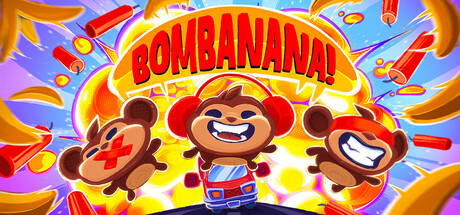
01. Defusing the Bomb Is Impossible Alone from the Start
BOMBANANA! divides the information needed
to defuse a bomb among three players.
The Blind Monkey is the one who actually
interacts with the bomb, but cannot see its colors or read its screens. The
Deaf Monkey can see the bomb and speak to teammates, but cannot hear them. The
Mute Monkey can see the game and read the bomb disposal manual, but cannot
communicate through voice chat.
In other words, everyone knows something,
but nobody knows everything.
Imagine a bomb module that requires the
player to identify and cut a wire of a particular color. The player responsible
for cutting the wire cannot see the color, while the person who can identify it
cannot directly communicate everything they know to everyone else. What looks
like a simple wire-cutting action actually involves several steps: finding the
information, understanding it, communicating it, and carrying out the action.
That creates a very clear division of
responsibilities among the three players.
Someone needs to observe. Someone needs to
communicate. Someone needs to act. But these roles are not completely static.
As the levels change, players have to keep checking what their teammates can
see and adjusting the way they communicate according to the situation.
That is why the cooperation in BOMBANANA!
is different from three people simply working on the same objective at the same
time. Each player holds only part of the information, and the three have to
piece it together to complete a task that none of them can solve independently.
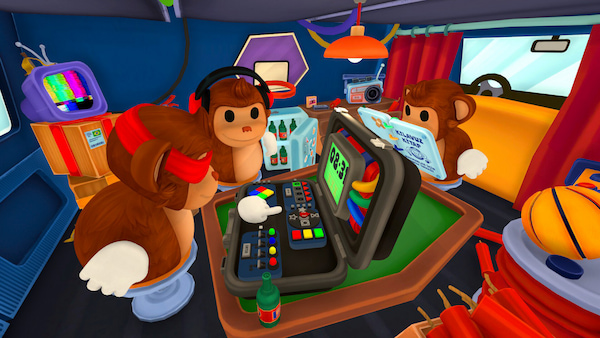
02. Information Gaps Change the Way You Play
What makes the game stressful is not
necessarily the complexity of the bomb itself. It is the fact that information
has to pass through another player before it reaches the person who needs it.
One player may see the correct color while
the player cutting the wire cannot. Another teammate may not even be able to
hear the previous explanation. A decision that would normally take a few
seconds can suddenly require repeated confirmation through color, position,
direction, or even gestures.
Over time, players naturally begin to
develop their own ways of communicating.
Confirm the position first, then describe
the color. When something cannot be explained directly, use a gesture or point
toward the relevant object. When two pieces of information do not match, stop
and check again instead of acting immediately.
The game's gestures, pointing, waving, and
other interactions are designed to support exactly this kind of information
exchange.
As a result, what players need to learn is
not simply how to operate the bomb. They also need to learn how to communicate
and interpret information accurately.
A familiar three-person team may gradually
develop its own system. Who confirms the information? Who repeats it? When
should everyone stop and double-check? These details may seem unrelated to the
actual mechanics, but they can directly affect how efficiently the team defuses
a bomb.
At that point, communication is no longer
just a tool for completing the task. It has become part of the gameplay itself.
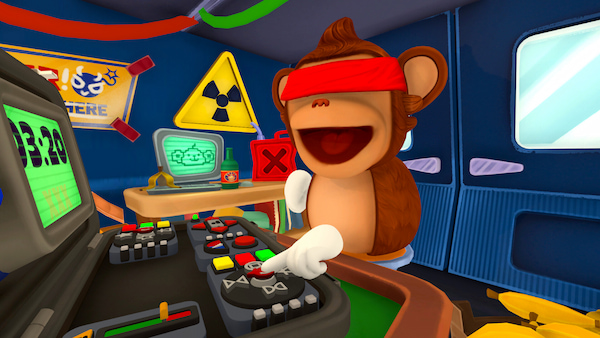
03. Failure Is Not Just a "Mistake" — It Is a
Breakdown in Coordination
Perhaps the most interesting part of this
design is the way it changes where failure comes from.
In a traditional game, failure is often
fairly easy to explain: a missed input, a wrong decision, or a failure to
understand an enemy's attack pattern.
In BOMBANANA!, the situation is often more
complicated.
Someone may have misread the information.
Someone may not have heard the whole instruction. Someone may have
misunderstood a teammate's description. And in the final seconds of the
countdown, someone may simply panic and cut the wrong wire.
When the bomb goes off, it is hard to
reduce everything to "someone didn't know how to play."
That creates a very different emotional
response.
While the bomb is still ticking, everyone
is focused on getting the job done. Once it explodes, though, the immediate
tension often gives way to something else: trying to work out exactly where the
team went wrong. The pressure of the failed attempt can turn into a
surprisingly light-hearted post-mortem.
The game does not make failure feel less
important. Instead, it spreads responsibility across the whole team.
The real question is not whether one player
made a mistake, but whether the entire chain of cooperation worked as it
should.
That also gives repeated attempts a
different purpose. The next time around, players may not change the way they
press buttons at all. They may change who does what, how information is
communicated, or when the team pauses to confirm an answer.
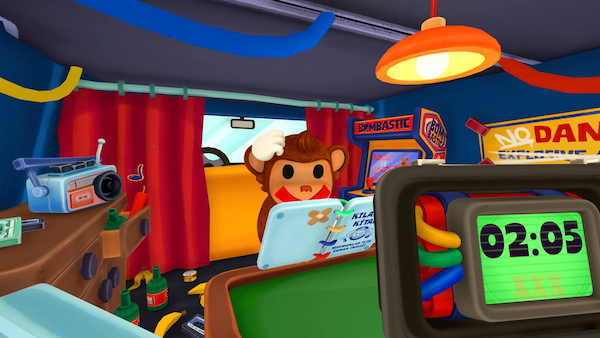
04. Three Players: The Foundation of the Entire Design
BOMBANANA! requires exactly three players.
That may sound restrictive, but it is precisely what keeps the game's core
system intact.
With fewer players, part of the information
and responsibility would simply disappear. With more players, the clean
division of information could become diluted by too much overlap.
Three players create a complete
collaborative loop.
Each person has a limitation, but each
person also holds information or a responsibility that the others cannot simply
replace. One player cannot see. Another cannot hear. A third cannot speak
through voice chat. These restrictions overlap in a way that makes
communication, confirmation, and execution unavoidable parts of the process.
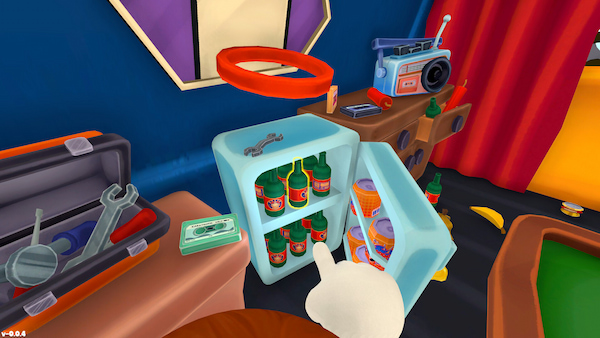
The full release currently offers 30
handcrafted Campaign levels, along with Endless and Custom modes, giving the
three-player system room to play out across different combinations of puzzles
and environments. In Endless, the levels are procedurally generated and become
progressively harder, while Custom mode allows players to adjust elements such
as bomb difficulty, timers, module types, environmental hazards, and the number
of mistakes allowed.
From this perspective, the strict player
limit is not simply a way to make the game harder.
It is there to make sure that every player
genuinely matters — and that no one can solve the problem alone.
Final Thoughts
The most interesting thing about BOMBANANA!
is not how complicated its bombs are. The more meaningful change is that it
takes something that would normally belong to the realm of pure gameplay
mechanics and turns it into a problem of information and cooperation.
Knowing the answer is not enough. The right
information has to reach the right person, who then has to carry out the right
action.
When everyone holds only part of the
information, cooperation stops being three people acting side by side. It
becomes a process of filling in one another's gaps.
That may be what makes BOMBANANA! worth
talking about. With a very simple bomb-defusal framework, it turns
communication, confirmation, and teamwork into actual game mechanics.
Image Copyright Notice: The images related
to BOMBANANA! used in this article are sourced from the game's Steam store
page. All rights to the relevant images and game assets belong to the game's
developer and other respective copyright holders. The images are used solely
for game introduction, commentary, and industry analysis.
About Glodom
Glodom is an innovative language technology
solutions provider with strong expertise in game localization. The company has
established long-term partnerships with leading global game companies,
including Tencent, NetEase, and Nintendo, and provides localization services
across a wide range of game genres, including role-playing games (RPGs),
strategy games (SLGs), shooters, MOBAs, simulation games, and anime-style card
games.
Today, Glodom has more than 300 full-time
employees and a global network of over 10,000 native language professionals
across more than 40 countries and regions, supporting localization needs in
more than 200 languages.
Glodom combines technology with
professional language services throughout its localization workflow. Its
proprietary intelligent language technology platform integrates translation
memories, dynamic terminology databases, and AI-assisted capabilities to support
multilingual projects, helping teams manage the challenges of frequent updates
and simultaneous language releases more efficiently.
At the same time, Glodom has established a
comprehensive quality assurance process covering native-language translation,
cultural adaptation, linguistic review, Localization Quality Assurance (LQA),
and testing in real game environments. From cultural accuracy to large-scale
multilingual delivery, Glodom remains committed to consistent quality and
reliable localization services for global game audiences.
